Friday, 22 September 2017

Pauktuutit Inuit Women’s Association

By Kara Passey, 1st year MDP student 

The concept of an Inuit Women’s Association was born out of conversations in the late 1970s, and put forward in a 1981 resolution by Inuit Tapiriit Kantami (ITK). Pauktuutit was created to address the existence of the unique barriers that Inuit women in Canada face in the pursuit of wellness for themselves and their families, and that it was necessary to create a specialized, concentrated organization to develop approaches to overcome these barriers.

Amauti at Pauktuutit
Pauktuutit has since become the leading national organization on issues pertaining to the health and equality of Inuit women in Canada. They utilize a wholistic model for wellness and development, acknowledging that all their individual pursuits contribute to one strong whole. Approaches include program design and implementation, networking/partnerships between regional delegates and government, research, as well as advocating, lobbying, and court challenge activities. 

The themes of their work encompass economic development/ financial empowerment, intellectual property and traditional Inuit ecological knowledge, housing, health (mental, physical, and spiritual), awareness campaigns (safety, AIDs, tobacco, drinking and driving), violence against women, justice, and participation in conversations pertaining to Indigenous policy and constitutionalism. 

Despite the lengths at which they’ve built partnerships and networked with other regions, organizations, and systems of government, Pauktuutit struggles to have their voice heard at the national level. They are often only invited to conversations about policy and legislation via proxy of other organizations (such as ITK or the Native Women’s Association of Canada), or are not consulted at all. In some cases, such as the reports constructed by the Royal Commission on Aboriginal Peoples, they see their ideas and voices reflected within recommendations, but are not included in implementation processes. 

This summer I had the opportunity to work with Pauktuutit on a research project that both analyzes the timeline of Inuit policy and constitutionalism (as implemented by the Canadian Federal Government), highlights the ways in which Inuit communities are experiencing colonization, and were not consulted in the creation of policy, legislation, and development projects that have effected them directly. 

While this analysis helps to illustrate the reality of Inuit development and governance today, the second half of the paper describes the ways in which other national Indigenous organizations (NIO) achieved their status as recognized NIOs within constitutional processes, and also provides an analysis of the creation of Pauktuutit and the work they have done to date. The paper includes an explanation of Pauktuutit’s wholistic approach, their endless work towards the financial empowerment of Inuit women, inquiries into justice processes and violence against women, as well as court challenge activities. Pauktuutit hopes to use this research to inform their requests of involvement in consultation processes, and to build a stronger relationship with the Canadian Federal Government in the pursuit of reconciliation.


Wednesday, 13 September 2017

Researching the Effects of Community Based Education and Training in Nisichawayasihk Cree Nation

By Cassandra Szabo, 1st year MDP student

In addition to my work at the Atoskiwin Training and Employment Center of Excellence (ATEC) doing co-ordination, proposal writing and programming I have been working on a research project that is in partnership with ATEC and the Manitoba Research Alliance (MRA). The project's title is “Aboriginal Employment and the North: An Examination of Aboriginal Labour Training and Labor Inclusivity at the Atoskiwin Training and Employment Center (ATEC) in Nisichawayasihk Cree Nation, Manitoba, 2006-2020”. The main researchers of this project are Henk Warnar of University College of the North and Shauna MacKinnon of MRA and the University of Winnipeg.

ATEC hallway
The aim of this project is to show the stories and journeys of students that have attended ATEC. MRA has previously conducted studies examining Indigenous peoples' access and outcomes to training, education, and employment and these studies have shown that the most successful programs are ones that are small, holistic, and community based. 

Seeing as ATEC has now been in operation for 10 years it is positioned well to be used as an example of how this type of holistic and community based training functions and the specific benefits of it. ATEC has created a holistic model that takes into account all needs of the student, and it is located in the First Nation community so students do not need to leave their homes and families. The methodology of this research was decided upon with the staff at ATEC and it was decided that it should be as qualitative as possible.

My role in this research project came to fruition because I would be spending a significant amount of time on location with the students from various programs, and so I was offered the opportunity to join the project and conduct interviews as well as demographic surveys. I have learnt a lot from being involved in this project, many technical research processes and proper research protocol in a First Nation community.

When I first arrived in the beginning of May I believed I could get the interviews started and completed by June, however I realized that this was not going to happen- my first interview was not until late June. I realized the importance of making connections with individuals and building up relationships so that the students knew who I was and that they could trust me. I also realized that the researcher can be very influential in an interview, and the interviewer effect is a very real phenomenon. After listening to some of the first interviews I did, I came up with better strategies to ask questions in ways that weren’t too leading.

After conducting 25 interviews with students of all various programs operating at ATEC it is clear to see that the training center has changed the lives of all of these students in some way- and that this model does in fact produce high success rates. Many students report having higher self-esteem, many feel like they can go on to do more education and training, and many say that they would never have attempted to go to school had it not been for the people at ATEC that know them and encourage them to come to school.

Tuesday, 12 September 2017

Do what you can: Building communities in whatever way make sense

By Stephen Penner, 2nd year MDP student

The summer was spent reflecting on the question of development: respectful development, requested development. When to act, what to do, and how to do development.  It was spent struggling with the larger question of “what is the place for a non-Indigenous person to work in Indigenous communities” and the smaller challenge of appropriateness of addressing requests made by Yup’ik community members. The short answer to the broader question, is that while on placement for the program, one must act in accordance to the program and use the lessons learned in the MDP to facilitate respectful approaches and answers. 

Community general store in Alaska

My first request was to create a business plan for a Yup’ik community based commercial enterprise. I called upon my learnings from the course in Indigenous Business Planning and my group work project from the MDP Capstone course. The plan was to create an Anchorage based food distribution company as a division of the commercial enterprise.  Allowing the community to take advantage of the preferential treatment that minority owned businesses receive when bidding on contracts. I spent two days in Anchorage with the principal, meeting with potential partners and entities that were going to be critical in executing the plan.

Fish processing
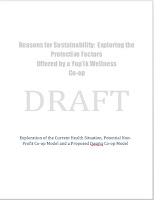
The second request was to build an “un-corruptible” intra-community wellness agency to act in support of the Qunasvik initiative whose focus is suicide reduction.  The objective was to create a Yup’ik based agency that could act, support and build protective factors in the 5 communities that the Qunasvik was active. I knew the development challenge would be to understand the lived experience of the Yup’ik and translate that into the model.

Choosing a Co-op model, I created an Indigenous structure that included important cultural features to the Yup’ik that needed to written into the by-laws. Based on the Qasgig (the traditional meeting place of the Yup’ik) I outlined the reasons, rationale and starting structure of a not-for-profit (501(c)) model.  Reviewing the plans with a Co-op developer at the University of Alaska Anchorage, I received his blessing that this model as executable. I was able to complete the proposal prior to my departure.  A review of the funding structures and building an understanding of successful prevention models allowed a path to be suggested as a way to restore agency to Yup’ik communities.

 One summer, two models, one unforgettable experience and many lessons later, I am left with the ongoing question that I started with.  The only answer that I have is that when asked to deliver a project, bring the best of what you understand of the community and the best of what you can offer as a “gift” to the community. You may use such opportunities to facilitate “the good life.”

Friday, 8 September 2017

Looking Forward by Looking Back: Reflecting on the Importance of Indigenous Future Imagery

By Jasmin Winter, 2nd year MDP student

The end of my field placement with the Initiative for Indigenous Futures (IIF) essentially marks the end of my requirements for the MDP program. While our official convocation is not until October, the uncertainty about my future has already begun to creep its way to the forefront of my mind. I know that I am not alone in this… in fact, if there was an emotional theme for this past year, it would probably be “Uncertainty.” With access to information at an all-time high, it is fair to say that more than ever, this increasing unrest is extending well beyond the individual and into concerns about our collective future. 

My last day in the lab! Photo credit: Dion Smith-Dokkie
I am so grateful to have had the opportunity to see firsthand how IIF is creating spaces for Indigenous peoples to participate in these discussions, to address this uncertainty with unique perspectives rooted in worldviews that allow for the identification of gaps in dominant ways of thinking. It is becoming more and more clear that the magnitude of issues that we are facing necessitates as many different solutions as we can generate.

From what I have learned this summer through reading articles, listening to incredible Indigenous innovators, and being exposed to a plethora of Indigenous art and new media, I have gained more insight into how different understandings of time can affect our decision-making. The short-sighted and unsustainable nature of so many institutions that we depend on in our society can be directly contrasted with Indigenous methods, such as thinking of the future in terms of seven generations ahead. I recognize that I have an extremely hard time conceptualizing what that even means, because, like many people, the way that I have been taught to conceptualize time does not extend that far away from myself. The most interesting part of this all is that this method almost always involves thinking seven generations back, and understanding time in a less dichotomous, non-linear, and more cyclical way.

IIF puts this into tangible terms through their unique engagement with digital technology, and more specifically, through storytelling. They are showcasing how Indigenous innovators are drawing from traditional knowledge to talk about the present and ensure that these stories continue into the future. This is evident in what is produced when Indigenous creators are free to determine their own technological endeavors; in addition to the diversification of the stories that are told about the future within mediums such as video games, science fiction, and virtual reality, we are seeing a focus on language revitalization apps, the mapping of traditional territories using GIS, and generally just new ways of interacting with communities and the environment that recognizes a past, present, and future that has been silenced for too long.

I am so unbelievably thankful to Jason, Skawennati, and everyone at IIF who allowed me to come into the lab and soak up the IIF experience. Whenever I am feeling down and out, I will push myself to renew the inspiration that filled me during this summer. The best part is that I will see some of the IIF crew in Winnipeg come November for the third annual Symposium on the Future Imaginary. I will use this post to say that the three-day event is open to the public, and that those interested can register here

Register now for the 3rd Annual Symposium on the Future Imaginary: Radically Shifting our Indigenous Futures through Art, Scholarship and Technology!

Wednesday, 6 September 2017

My Field Placement with Te Whānau o Waipareira - Part 1

By Sarah Wood, 2nd year MDP student
 
Views from Devonport
This summer (well, it’s winter here), I am completing my international field placement at Te Whānau o Waipareira, an urban Māori organization in West Auckland, Aotearora New Zealand. I am working with Wai- Research, the kaupapa Māori  research unit at Waipareira, which provides research and evidence to support Waipareira’s programs and services.

As for the specific projects I am involved with, one of the main activities I’m working on is writing a literature review on kaumatua (elders) ageing. In accordance with the population trends in Aotearoa New Zealand generally, the population of older Māori is increasing and I am exploring what is currently known about Māori ageing and what gaps and opportunities exist in the current literature pertaining to this growing population. Other research projects I’ve been involved with include assisting with ongoing research on Māori mental health as well as proofreading various Wai-Research publications.

Mission Bay on our first trip to the beach
Thus far, aside from the practical research and writing skills I’ve been honing, it has been incredibly valuable to learn about kaupapa Māori  research and the ways Māori  culture and language are incorporated into the organization more generally. As an Indigenous person, there has been a lot of opportunity to share our cultures and histories and gain deeper understandings of the strengths, challenges, and opportunities present in our different Indigenous communities.

Aside from placement, I’ve been enjoying getting to know Aotearoa. Fellow MDP student Paige and I have spent weekends in Rotorua, Wellington, climbing volcanoes and visiting every island in Auckland. 

Sarah Wood and Paige Sillaby at a rainy lookout in Wellington

Friday, 1 September 2017

Indigenous Innovation and Entrepreneurship showcased at the Summer Solstice Indigenous Festival

By Kara Passey, 1st year MDP student

Powwow Dancer
On a sunny Saturday on June 24, the 2017 Summer Solstice Indigenous Festival held their annual Pow Wow competition in Vincent Massey Park in Ottawa, Ontario. A corresponding event, delivered in partnership with the Social Innovation Division, Indigenous Social Innovation & Social Finance, within the Employment and Social Development Canada department of the Strategic and Service Policy Branch, took place to highlight the wealth of Indigenous entrepreneurship that is showcased at the Pow Wow. The event, dubbed the Pow Wow Pitch competition, was created out of acknowledgement that the Pow Wow is historically a place of innovative social enterprise through entrepreneurship and trade, and takes on the format of a is a Dragon’s Den style competition. 

Nineteen different Indigenous entrepreneurs had the opportunity to pitch their projects for 60 seconds to a panel of judges. Those selected for the second round of judging received coaching and mentorship to prep them for their next round of pitches. Ultimately, the finalists were decided by a panel of judges including, Gail Chamberlain, and Kathryn McDade, Senior Assistant Deputy Minister, Employment and Social Development Canada, and Director General, Catherine Scott, Director General, Employment and Social Development Canada. The National Aboriginal Capital Corporation Association (NACCA) contributed prize funds.

Treeteas Brewing
The event was an excellent way to display the diversity of Indigenous entrepreneurship and innovation; competitors ranged from beauty products, fashion, food, to community wellness projects. The majority of projects always had socially consciousness initiatives incorporated into their mandate – such as Cheek Bone Beauty, who donates 10% of all purchases to First Nations Child & Caring Society of Canada. Other competitors included Jay Soule of Chippewar, a graphic design/illustrator/print shop who is possibly best known for his amazing t-shirts or recreation of western movie posters with Indigenous imagery, or Treeteas Brewing, an ice tea manufacturer based in Georgina Island.

Chef Anna Cote won the first place prize of $5000.00 with The Birch Bite, a catering business which delivers healthy meals for her community and also provides classes so that community members can cook for themselves. The second place winner of $2500.00 was Lisa Commanda, a Youth Diversion Worker for Kitigan Zibi, for her new project Commanda Security and Dispatch Services. The third place prize of $1000.00 went to Minda Forcier, for her handmade health and beauty products, which she sells under the name of Anokian Nature. Finally, the people’s choice award was given to Ginger Cote, for her project where she is creating an Indigenous focused toolkit for expecting mothers. 

L-R: Sunshine Tenasco, Kirsty Jackson, Kara Passey, Lee Seto-Thomas & Greg Dreaver

Rautaki Māori

By Paige Sillaby, 2nd year MDP student 
 
Paige in front of the Te Whānau o Waipareira office

It’s been a month since I completed my international field placement at Te Whānau o Waipareira, and I am missing my Waipareira whānau, as well as the breath-taking mountains of Aotearoa New Zealand. Words cannot describe how deeply this summer’s field placement has impacted my personal and professional development. 

During the first month of field placement, I spent a lot of my time reading through documents to help me understand Waipareiratanga, which loosely translates as the unique way in that Waipareira operates as Māori organization. Some of the documents that I reviewed were; Te Whānau o Waipareira Strategic Plan, and the Waitangi Tribunal.  I would say that much of the information I learned this summer came from speaking with members of the Strategic Innovation team, as well as Wai- Research team about Maori culture, and the history of Aotearoa.

Mount Eden
My primary research project at Waipareira was to work alongside key staff to research and document the Rautaki Māori – Work-Placed Language Revitalization Strategy pilot. The culmination of this research is a summary report with a toolkit that can be used to implement language revitalization strategies in other Indigenous organizations. The overall purpose of the Rautaki report was to gather feedback from key participants in the Rautaki Māori model and designed to meet the following three objectives.

          To determine and understand the impacts of Rautaki Māori on Wai-Atamai and Wai-Intel,

          To identify strengths, challenges, and opportunities of the Rautaki language strategy

          To document Waipareira Rautaki Māori model as a strategy for workplace language revitalization.

At the end of my placement, Waipareira generously printed out the Rautaki Māori report, which was put together by the Graphic Design team. I was not expecting Waipareira to do this, and I am so appreciative that they provided me with copies to take home and share with Indigenous organizations elsewhere.

Through my time in Aotearoa and especially working on Waipareira language revitalization strategy, I have truly been inspired to learn my Indigenous language. During my three months at Waipareira, I learned a little bit of Te Reo through the Rautaki Māori initiative. One of the Rautaki activities was to build a pepeha. The pepeha is a way of positioning yourself within a Māori worldview.  I am proud to share my pepeha;

Ko Horseshoe te maunga
Ko Simcoe te roto nui ake
Ko te Alantic te moana
Ko Big Canoe te rangatira
Ko Georgina Community Centre te wharenui
Ko Chippewa ki Georgina Island te hapū
Ko Ojibway te iwi
Ko Paige ahau

I would like to say chi-miigwetch/ thank you to Waipareira for hosting my field placement. Also, I recommend checking out #WaiRauMaori on twitter to see some of the awesome Rautaki Māori activities from with summer!

Ngāpuhi