Showing posts with label relationships. Show all posts

Saturday, 14 September 2019

It’s all relational

By Chelsie Parayko, 2nd year MDP student
As my time in Aotearoa came to an end, I reflected on the experiences I’ve had over the two field placements that we are required to complete. Some of the most valuable lessons and knowledge came from those experiences, however the relationships I have formed are ones that will last beyond the walls of academia. Below is the post:
Last summer I learned a Cree word – Kiwícéwákan, it roughly translates to “the one you walk with.” Beyond the simple English translation, in Cree this word means more than to simply walk but to journey, to connect, to have meaningful relations with another person or persons. I learned this word while completing my domestic field placement for my master’s in Development Practice: Indigenous Development program, from a beautiful Cree woman who seemingly understood what was happening in my life before I knew it myself. The word rings true in certain spaces I have occupied and is something that has been dancing through my mind in recent.
As a child I wanted to sink into the masses. At the time, this meant lathering my body with sunscreen and restricting the hours I spent outside in the sun to avoid being “too brown.” I was terrified of having the conversation around who my ancestors are, and what that meant among my peers. I knew that, at that time, being identified as Indigenous or as Cree that I would be treated differently, perhaps treated like a second-class citizen. It has taken a lot of uncomfortable moments to shift my own perspective and my journey of unlearning is only at the beginning. Surrounding myself with other Indigenous peoples who celebrate their ways of knowing is critical to my own wellbeing and is why I was attracted to Aotearoa.
These pivotal moments are one of the most spirit awakening, however they are often the path-less-taken, and rather lonely within western academic walls. Carved by our strongest ancestors, these journeys today are what I believe to be my greatest responsibility. There are movements that have been radical in shaping the atmosphere that Indigenous peoples in Canada, however from a smaller scale we more often see individuals taking the lead in resurging our ways of knowing and being, unsupported. My own experiences have held true to this fact.
It has been one of the most refreshing and awe-inspiring things to be among the whānau at Waipareira who, for lack of better words, just get it. Making space for Indigenous ways of knowing and being is embedded in the everyday practices and is certainly something that I will take home as one of the most profoundly key elements of success for the iwi.
Reflecting on my experience in Aotearoa, within the MDP program and beyond I cannot help but be incredibly proud at the people I have met along the way and for those who have launched down this journey with me. People like my sister who have, unapologetically taken on roles not traditionally held by women to ensure that our traditions are not lost. Teams like those at Waipareira who make space for Indigenous ways of knowing regardless of the dominant western systems and structures. I am so grateful to call these people my whānau. There are not enough words to begin to extend the gratitude I have for this opportunity. Ekosani for being Kiwícéwákan!” 
Connections and relationships are everything. As an Indigenous person it has been taught to me that everything is relational, and through these two placements the lesson has been incredibly solidified. These relationships span across oceans and land, to the animals and the plants, to the stars and back. So much to be thankful for.
(L-R) Sneha Lakhotia, Cate Mentink, Chelsie Parayko, Tanya Allport and Haze White

[1] Parayko, C. (2019). Ekosani for being kiwicéwákan. Retrieved from https://www.waipareira.com/wai-atamai/

Saturday, 3 August 2019

Practising what you preach for sustainable development

By Gloria Makafui Dovoh, 1st year MDP student
In my first blog, I made mention of the usefulness of considering both the context and culture of a community in understanding cultural practices as well as building relationships and having an open mind.  During my field placement with the Regional Advisory and Information Network Systems (RAINS), I realized these tools early enough to assist with my twelve-week journey.  At the end of the three months experience in the field, I have no doubt this placement was a good fit. I have personally enjoyed the journey of growth during this placement.
Gloria (R) with a student during a project evaluation session
Even though I come from Ghana (Southern Ghana), I have been blinded to the diversity of cultures in the Northern part of the country all this while. The Northern part of Ghana, where RAINS is located has a mind-blowing diversity in languages, dances, cuisine and dressing.  I was fortunately gifted with a beautiful Northern outfit called the “smock” at the end of my placement.
Aside from the organization’s work with rural communities in Northern Ghana, RAINS manages a day crèche to support working mothers, both staff and from the general public, which they seek to expand in future. The saying “Practice what you preach” is very evident with the organization. Staff also engage in Village Savings and Loans Association (VSLA), (a livelihood intervention for a group of people who collectively support a structured process of saving money and collecting loans at a local level) to have practical experience of the saving and loans framework that has been adopted in many rural communities to build reliable sources of capital for women’s small businesses.
I am thankful to the Regional Advisory and Information Network Systems (RAINS) and Master’s in Development Practice: Indigenous Development (MDP), the University of Winnipeg for this adventurous and meaningful experience. I have learnt a lot and I am grateful for this opportunity of a lifetime. I had the opportunity of improving both my professional and personal skills. In the nutshell, I experienced hands-on learning and training in a field setting, an experience I have been looking forward to since the inception of my journey to the MDP.
Group photo on Gloria's last day in placement


Tuesday, 16 July 2019

All My Relations: Building Connections in South Australia

By Taylor Wilson, 1st year MDP student

Before I start this blog post, I would first like to acknowledge the Kaurna people as the traditional custodians of the Adelaide region, where the SAHMRI building is located; I recognize the Kaurna peoples cultural, spiritual, physical and emotional connection with their land.  I honour and pay my respects to Kaurna elders, both past and present, and all generations of Kaurna people, now and into the future. I also pay respect to and acknowledge Aboriginal and Torres Strait Islander people from other parts of Australia, and their connection to country. I want to say thank you to the warm welcome I received from every single Aboriginal, Torres Strait Islander, and non-Indigenous person I have met here and for allowing me to come to their home and work with them.  
SAHMRI building, Adelaide, South Australia
Six weeks into my placement at Wardliparingga, the South Australian Health and Medical Research Institute’s (SAHMRI) Aboriginal Research Unit, and I can safely say that this group of people have exceeded all expectations I had for coming to work here. Thanks to Implementation Science theme leader, Dr. Natasha Howard, I have been exposed to the various projects and academics that make up the unit. From the Aboriginal Diabetes Study (the first and largest of its kind) to the Barngarla Language Project. Then you have incredible Aboriginal and Torres Strait Islander scholars like Dr. Odette Pearson who works on understanding how policies and practices drive Indigenous health inequities; Dr.’s Karla and Kootsy Canuto who work in health promotion and Aboriginal men’s health (respectively); and theme leader, Dr. Alex Brown, an Aboriginal medical doctor who holds the unit together and pushes them to be the best Indigenous academics they can be. Not to mention all the incredibly talented up and coming young Aboriginal and Torres Strait Islander people who are working tirelessly on these projects as research assistants, administrative assistants, project officers, and so on. It’s incredible to see a team so steadfast in their Indigeneity along with non-Indigenous team members so supportive of their Indigenous colleagues.

Aboriginal and Torres Strait Islander peoples’ health, much like Indigenous health in Canada, is a vast sea of systemic issues and barriers, but the passion and fight that the Wardliparingga team has to make a difference and change the lives and circumstances of Aboriginal and Torres Strait Islander peoples’ is inspiring and commendable.

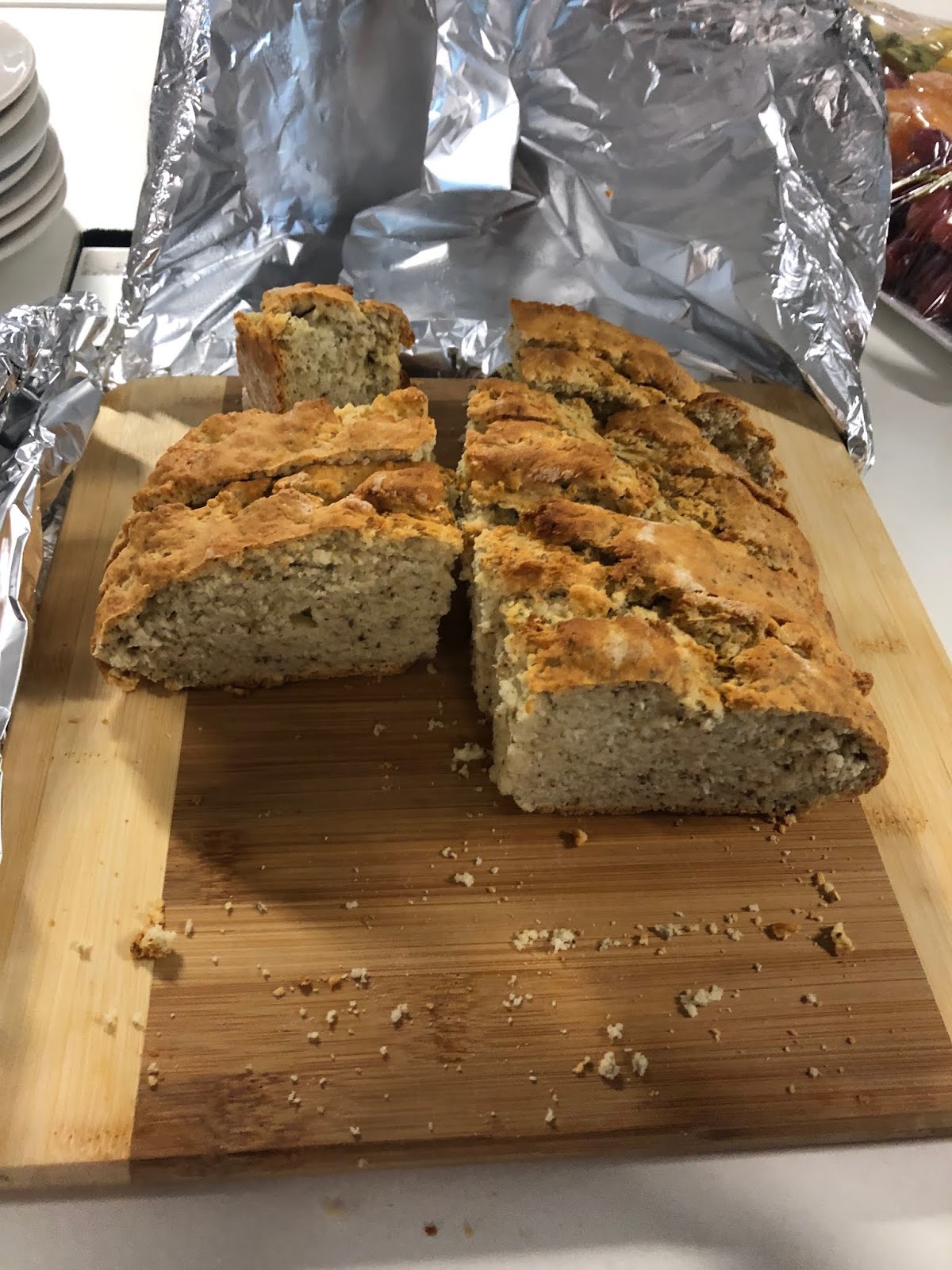
Damper - traditional bread
When I first arrived, I have to say I was nervous. Being Indigenous, but from another part of the world, I wondered if I would feel as connected here as I do at home. Being connected to land and people is what keeps me grounded, so would I feel the same here? During National Reconciliation Week (May 27 - June 3, 2019), the theme was “Grounded in Truth, Walking Together with Courage,” with the underlying theme of relationship building and connecting in a shared understanding. As I got to know more people, had more conversations around who I was and who they were, I began to feel more connected. I learned that their connection to the land and their language was just as important as my own. I learned that health inequities for Aboriginal and Torres Strait Islander people are incredibly similar to those we face in Canada and get to share insights and discuss Indigenous-led solutions. I got to share food with them and enjoy some traditional foods like damper (much like bannock from home), watch and listen to traditional Kaurna performances, and share stories of what it’s like being Indigenous where we are each from.

I am learning more than just the academic things I do at Wardliparingga. I am building more than just networks. I am only half way through my placement, and I am looking forward to what else I have to learn and sharing more of who I am with the people here.

Jack Buckskin and Dance Co. at the Gawler Reconciliation Event


Saturday, 5 January 2019

Community Knowledge at the Core

By Erika Vas, MDP student
 
Boozhoo, Tansi, Aaniin, Wotziye, Ho/Han, Tanshi, Asujutilli, Hello!

Michael Redhead Champagne & Erika Vas Photo Credit link
As mentioned in my previous blog post, I completed my domestic field placement working with University of Winnipeg (UW) and Canadian Museum for Human Rights (CMHR) co-creating and assisting in the delivery of the first-ever Human and Indigenous Rights Executive in Residence Program in Canada. A key component of this program were the featured presenters both local and national, some of whom I knew personally. The relationships I have made during my studies have been foundational in my life in Winnipeg. The support and mentorship from individuals has allowed me to become a part of some amazing communities, and to learn from and with them. These people have made Winnipeg feel a lot more like home. Through my work in creating and implementing the Executive Leadership Program, I hoped that I could share with the participants some of my learnings and experiences from these communities.

Program participants during Indigenous Day Live Round Dance Photo credit: Trevor Hagan (Winnipeg Free Press)


A highlight of the placement was my responsibility for planning and organizing a line-up of speakers to complement the curriculum and modules. I am grateful to the individuals I’ve met during my time in Lethbridge and Winnipeg who presented at the program and demonstrated what “leading by example” could look like in a wide range of areas. The significant contributions of Theodore and Morgan Fontaine, Michael Redhead Champagne, Jenna Liiciious, Mitch Bourbonniere, and Alex Neve contributed to the program’s success and presented several experiential learning opportunities in the community. Together, the participants had the opportunity to learn from these leaders about Residential Schools, Truth and Reconciliation, Leadership and Engagement, and Human and Indigenous Rights and Intersectionality.

The “Community Engagement & Relationships” module, which I was responsible for creating, drew from community capacity and the expertise of those in the community. It consisted of engaging with community and learning how to establish relationships based on respect, relevance, reciprocity and responsibility. This included a panel conversation about leadership and community engagement with Michael Redhead Champagne, Jenna Liiciious, and Mitch Bourbonniere, local leaders who are making a difference in the community, nationally, and internationally. To take learning beyond the walls of the museum, the participants also had an evening outing to Meet Me at the Bell Tower in Winnipeg’s North End. They were welcomed by Michael, Jenna, Aboriginal Youth Opportunity (AYO!) leaders, and community members. 

Meet Me at the Bell Tower
Meet Me at the Bell Tower was created to foster a greater sense of community in Winnipeg’s North End. Every Friday at 6pm, rain, snow, or shine, the community comes together to explore a wide range of issues such as child and family welfare, violence, racism, education and reconciliation. The Executive Leadership participants had an opportunity to be a part of the community, observe youth leadership, participate in the Bell Tower raffle, and assist with kitchen activities.

While this program was a memorable for participants, it was a memorable time for me as well. It marked my first summer in Winnipeg and gave me so many opportunities to learn from and with participants, presenters, and community and create new friendships. It is opportunities in the MDP Program such as this domestic field placement that have influenced my learning journey and lead me to new paths.  

To all of you who have helped me along the way, I am forever grateful.