Showing posts with label social enterprise. Show all posts

Tuesday, 9 August 2022

My role in upscaling the revolving fund

By Tunde Ogunje, final year MDP student
 
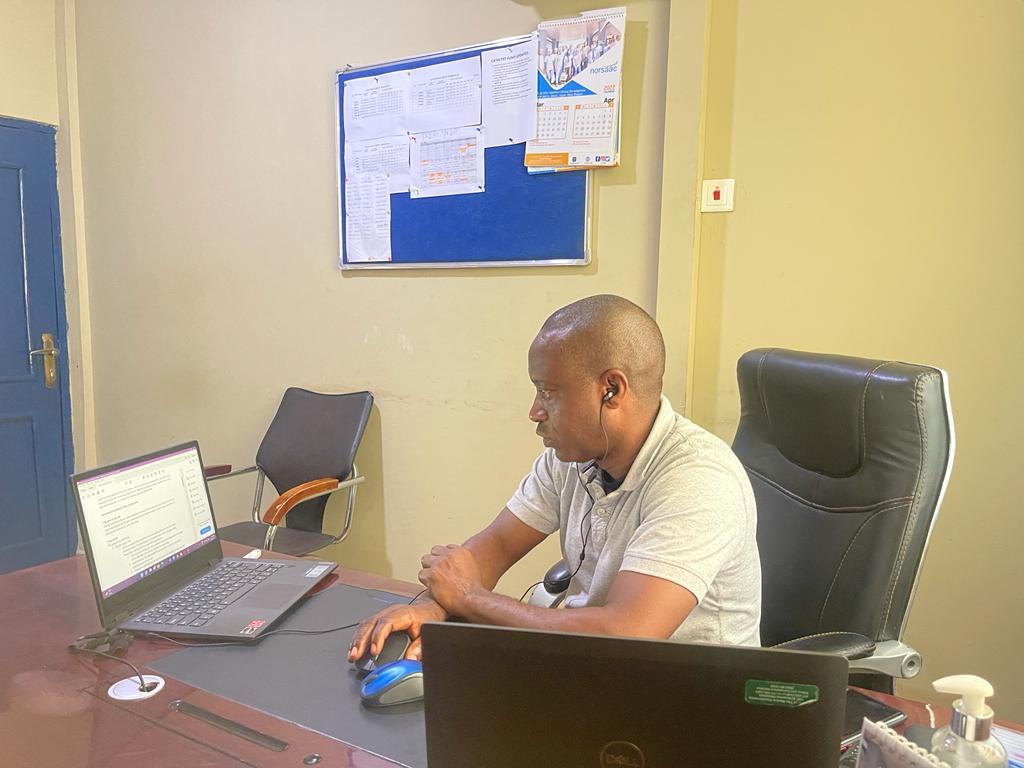
My field placement is with Norsaac, a local NGO in Ghana operating from Tamale in the northern region of the country. I worked with the independent subsidiary of Norsaac called NiV managing all the sustainable livelihood and social enterprise projects of Norsaac. The team of four worked on four concepts/projects: the FIPA fund, the YEESS project and strategic plan for training centre.

Though I was involved in four projects, including facilitation in training focused on developing women social entrepreneurs, I will be dedicating this space to the project about upscaling an existing revolving fund. This is because I consider it to be the flagship for all the projects I worked on.  My task was to come up with how to grow a revolving fund that started with GHS 10,000 Ghana cedis but had grown to over 100,000 Ghana cedis. I developed a concept paper that the NiV team used to discuss the idea to create a pipeline for continuous and sustainable inflow into the fund from different sources by developing an investment-type social enterprise fund.

Features of the proposed concept:

For the supply side:

  • Target size of the new fund is GHS 1,500,000), but with the option to further upscale.
  • Contribution to the fund should be an investment with the potential to yield return to the contributors.
  • Contribution is repayable but only after a minimum of 5 years.
  • Return on contributions should be less than market return but with emphasis on the social impact outcome of the fund which are financial inclusion, poverty alleviation, and gender equality.

For the demand side:

  • Increase the size of business capital that can be advanced to women entrepreneurs.
  • Continue with the current model of group lending.
  • Introduce social collateral security (e.g. Community accountability, use of many guarantors who are also investing in the fund, etc).
  • Incorporate business management training.
  • Create a network of business mentors to support beneficiaries in taking good business decisions.

Surplus fund: (difference between invested fund and credit advanced)

  • Identify secured, low-risk and liquid investments (Not capital market securities). 
  • Place surplus fund in income yielding investments returning minimum double of the highest return rate to investors. 
  • Prioritize the main purpose of the fund by placing large portion of surplus fund in securities that can be quickly liquidated without penalty.

Thursday, 7 July 2022

Strengthening the ecosystem for women entrepreneurship in Tamale, Ghana

By Tunde Ogunje


My field placement is with
the Northern Sector Action on Awareness Center (NORSAAC), a local NGO in Ghana operating from Tamale in the northern region of the country. I worked with the independent subsidiary of Norsaac called Youth Social Services Organisation (NiV) managing all the sustainable livelihood and social enterprise projects of Norsaac, with other three staff of NiV in a team.

The Projects:

In all, there were three projects we started and which we are still working on. After the orientation and initial meetings with NiV team, we concluded that the short time I had would be well spent if we could focus on advising on the mechanism to upscale and existing revolving fund.  Then, opportunity came for us to respond to an expression of interest (EoI). So, we submitted a grant proposal for a project we called YEESS - Youth Entrepreneurship Education for Secondary Schools. Towards the tail end of the in-person part of the placement, the need arose for us to develop the framework for a strategic plan for the newly built training centre as a potential source of additional revenue for NiV.

In addition to these three main projects, I also facilitated some sessions in the training for potential young, female social entrepreneurs in a project that Norsaac and NiV are managing for Youth Challenge International (YCI), called HerStart. YCI is funded by Global Affairs Canada

My role:

Ukasha Mohammed is the Chief Executive Officer of NiV and works along side both Salim Mohammed and Harriet Anafo. Majorly, I worked more like an advisor or a consultant. While we were all working on these three projects as a team, I was leading the development of ideas, developing the concept papers, creating shared drive using google drive for team members to make real-time inputs, calling for meetings to brainstorm on the ideas and concepts, and making presentations where necessary.

Wednesday, 26 August 2020

Indigenous Entrepreneurship and the Social Enterprise Movement


By  Alexander Keone Kapuni Oldroyd, 1st year MDP student
During my undergrad at Brigham Young University I became enamored with the social innovation movement that has found its way into business school curricula the world over. I was especially taken with social enterprise models. In my mind, this was the future, the next iteration of capitalism that was more inclusive, more sustainable, more focused on community wellbeing. Just think of the progress we could make by applying commercial strategies (and by extension private capital) to social problems, by breaking down the silos of government, the social sector, and the private sector! I left BYU feeling like this was new frontier, and I resolved to make my mark at the intersection of social innovation and Indigenous development.
Fast forward a few years to my time in the MDP program. I am fortunate to have had the opportunity to connect with many incredible Indigenous entrepreneurs and innovators here in Winnipeg and across the country. My work with Carol Anne Hilton and the Indigenomics Institute in particular has brought me into contact with the likes of Jeff Ward of Animikii Indigenous Technology, Ashoka Fellow Jeff Cyr of Raven Indigenous Capital Partners, and Jenn Harper of Cheekbone Beauty. As part of my field placement this summer, I’m in the process of connecting with another slate of incredible Indigenous entrepreneurs for the 2020 Indigenomics 10 to Watch List.
As I’ve talked with these entrepreneurs about their work, I’ve noticed certain patterns and characteristics about how they do business that is unique from traditional forms of entrepreneurship. In academic terms, I would call it a uniquely Indigenous entrepreneurial paradigm. What follows are a few of my key takeaways. In general, these Indigenous entrepreneurs:
•             Build community as the core of their business models, not just by providing employment but also meeting other community needs.
•             Use their businesses to support non-business-related community programs such as youth education.
•             Maximize every resource available, minimize waste, and behave sustainably.
•             Balance at least the bottom lines of profit, social impact, environmental impact, and community culture.
•             Overcome market failures by striving to reach all members of the community, not just the most profitable segments.
•             Incorporate values and worldview into every aspect of the business.
•             Are willing to work with other organizations and businesses to increase community impact even when it means giving up some competitive advantages.
•             Are incredibly resilient and able to overcome multiple complex challenges and barriers to success while drawing on the unique strengths of their communities.
Most of these aren’t surprising. I’ve been around Indigenous businesses long enough to know how committed Indigenous entrepreneurs are to their communities, and entrepreneurship has long been thought of as essential for community economic development. What was surprising, however, was just how much these quintessentially Indigenous ways of doing business mirror the social enterprise frameworks that are becoming increasingly mainstream (to much acclaim). And it was surprising because, for the most part, the language and frameworks of contemporary social innovation thinking are not common in many Indigenous contexts. Which is to say that the way of doing business expressed by these entrepreneurs (and Indigenous entrepreneurs across the country) doesn’t come from any new trends in business thinking or social innovation methodology, but from the worldviews of Indigenous communities that have existed on this land since time immemorial. 
Jeff Ward on Indigenous Innovation at TEDX
Jeff Ward put it best when he said that “Innovation is typically thought of as using new ideas to make things better. And while we certainly have new challenges and opportunities, we have to understand that Indigenous Peoples have been innovating on these lands for millennia... As the original inventors, innovators, and entrepreneurs on these lands, Indigenous Peoples have thrived here, sustainably, and we’ve never stopped innovating.”
What we’re seeing is the rest of the world catching up to how Indigenous peoples have been doing business for centuries. As the social innovation movement continues to popularize the next iteration of capitalism, we would all do well to learn from what Indigenous entrepreneurs have known for centuries.