
By Kaitlyn Duthie-Kannikkatt, 2nd year MDP student
India’s food system has undergone
many changes in the past few decades. Technologies have changed, staple foods
have shifted, and food security has been variable. The situation for many
tribal peoples is particularly acute as the varieties they’ve grown and the
agricultural methods they’ve used for many generations become threatened by
shifting economic, political, and cultural landscapes.
But here I the state of Andhra
Pradesh, in a hilly area called Araku Valley, the inevitability of that shift
is being called into question. Tribal peoples are organizing to maintain the
rich seed diversity that has characterized their lifestyle for generations.
With the help of Sanjeevini, a community-based organization with which I’m
undertaking my summer placement, people are becoming empowered to celebrate and
cherish their seeds and the cultural lifeways that sustain them.
 |
| Women carry a tuber harvest in from the fields |
My role here is to develop a case
study of Sanjeevini’s approach to mobilizing community-based seed conservation
by interviewing farmers, network partners, government officials, and key staff
and volunteer members about the impact of Sanjeevini and the sustainability of
their approach. Most of my time thus far has been spent living in a rural
village, nestled in a gorgeous agricultural valley, talking to farmers every day
about the kinds of varieties they’re growing, the preservation methods they
use, and their commitment to passing their knowledge on to their children and
grandchildren.
Understanding the role that
Sanjeevini has played in supporting people in that work is inspiring. They take
a holistic approach that is uncommon in the NGO world. They recognize that
people cannot keep that agrobiodiversity alive without just access to land,
livelihood opportunities, access to education, and the fulfillment of basic
human rights. Their work is rooted in strong relationships with local people
who know they can trust Sanjeevini to organize on their behalf when one of
those factors is at risk.
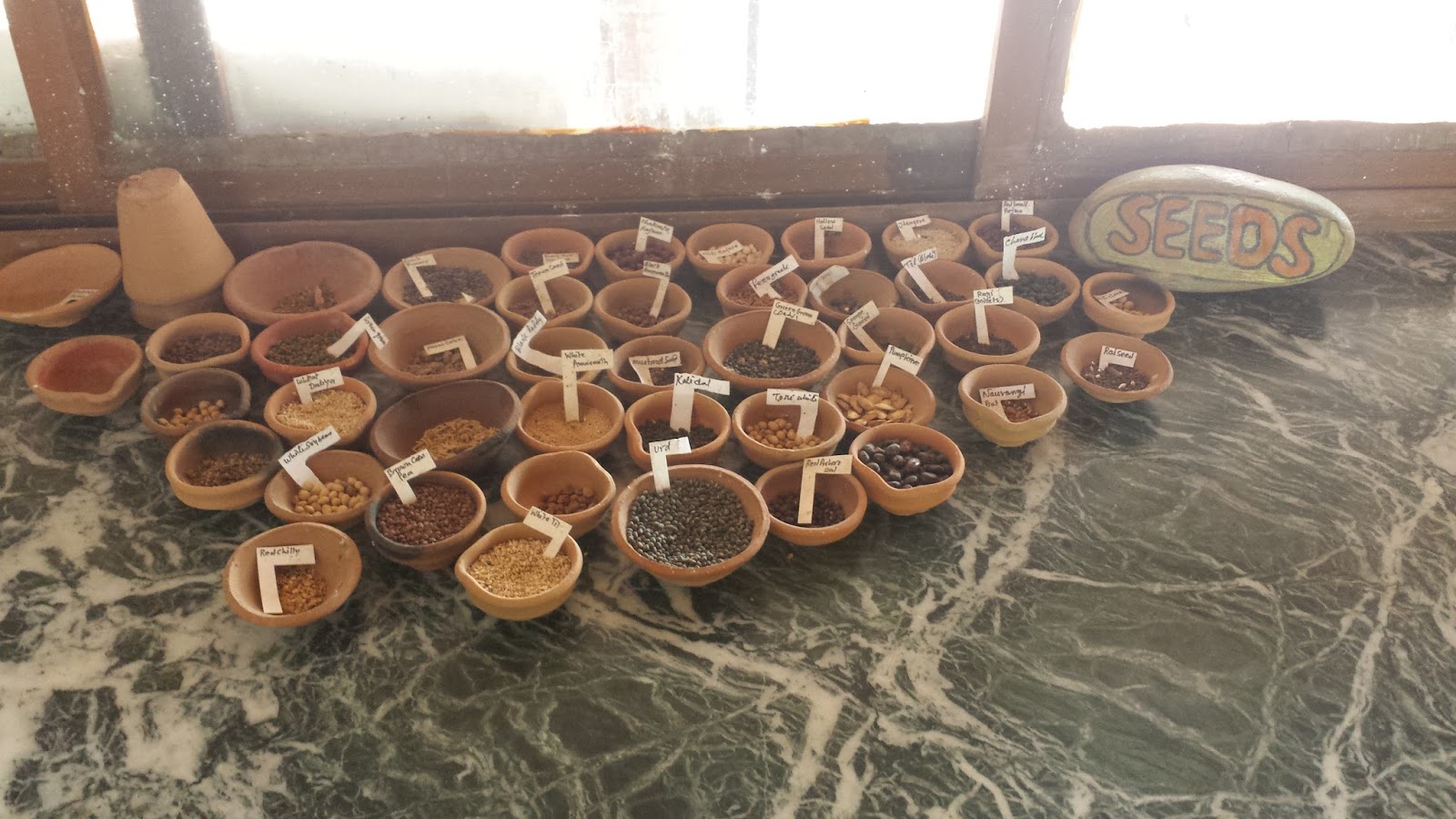 |
| Selections from Sanjeevini's extensive seed bank |
The founder and general secretary of
Sanjeevini, Devullu, told me this: “In the beginning, they (government and
others) thought I was a mad man. ‘Why would you want to preserve old seeds when
there are hybrids, new technologies that tribal people should embrace?’ they
would cry. Now, two decades later, everyone knows how important this work is –
government, NGOs, universities, and all are keen to work with Sanjeevini to
support tribal farmers.”
 |
| Learning Dhimsa (traditional dance) with my aunties |
Agrobiodiversity is increasingly on
the radar of actors at the state, national, and international levels.
Sanjeevini, however, has always known that supporting local, traditional
knowledge is the key to sustaining that diversity. Indigenous people have to be
supported if that diversity they have stewarded for so long is to be
maintained. It’s encouraging to see that notion is catching, however long it’s
taken to get there.


